

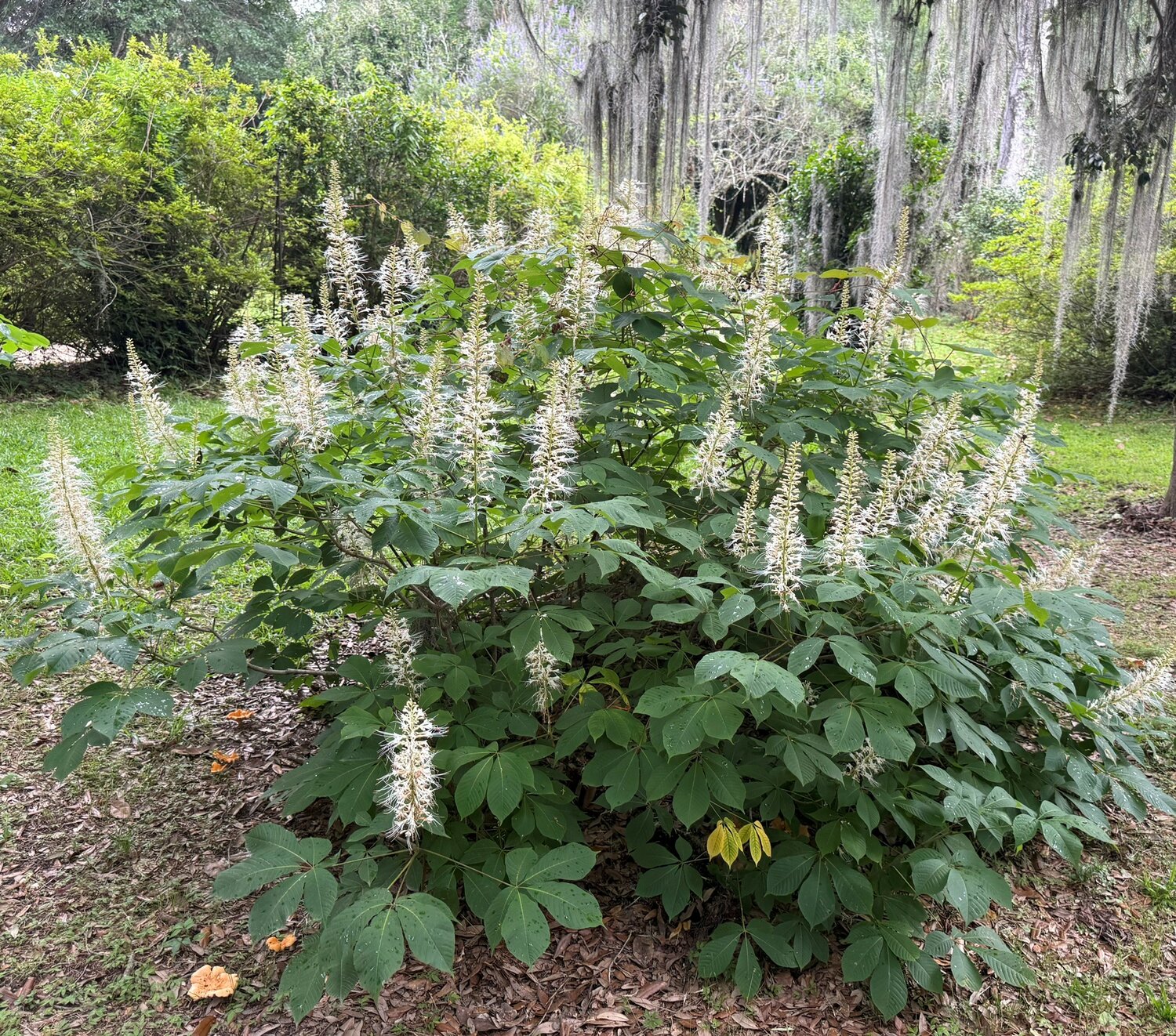
Last week I attended the Louisiana County Agricultural Agents Association meeting in St. Francisville, which included a tour of the historic Rosedown Plantation gardens. These 28-acre grounds are among the most documented and best-preserved gardens in the United States, thanks to the detailed garden journals of original owner Martha Turnbull. Each visit reveals something new, and this time—amid blooming magnolias draped with Spanish moss, hydrangeas, and gardenias—a lesser-known shrub in full flower caught my attention.
Bottlebrush buckeye (Aesculus parviflora) is a unique, shade-tolerant native shrub with outstanding seasonal interest and is an excellent choice for Louisiana landscapes. Though underused, this southeastern U.S. native offers bold texture, striking blooms, and ecological value, making it well suited for landscape plantings.
This large, deciduous shrub typically reaches 8 to 12 feet tall and often spreads wider than it grows through suckering stems. It works well as a natural screen, woodland border, or mass planting in shaded to partially shaded areas. Its compound leaves create a lush, tropical appearance through the growing season, then turn soft yellow in fall.
Bottlebrush buckeye truly shines in early to mid-summer, producing upright white flower spikes up to 12 inches long. These “bottlebrush” blooms create a dramatic display at a time when many shade plants have faded. After flowering, smooth capsules form, containing the glossy brown seeds known as buckeyes.
This plant is closely related to red buckeye (Aesculus pavia) a Louisiana native. Red buckeye blooms much earlier in spring with tubular red flowers that attract hummingbirds, while bottlebrush buckeye extends interest into summer. Using both species in the landscape helps provide a longer season of color and nectar for pollinators.
From a wildlife standpoint, bottlebrush buckeye supports bees, butterflies, and other pollinators during a seasonal gap in bloom. Its dense growth also provides cover for birds and small mammals. However, it offers little food value due to one important characteristic—its toxicity.
All parts of buckeye plants, including seeds, leaves, and bark, are toxic if ingested by people or pets. Symptoms can include vomiting, diarrhea, and neurological effects. For this reason, plant buckeyes with care, especially in areas accessible to children or animals. Proper placement and awareness are key to safely enjoying this plant.
In the landscape, bottlebrush buckeye performs best in moist, well-drained soils rich in organic matter. It thrives in part shade to full shade and benefits from mulch to conserve soil moisture during Louisiana’s long, hot summers. Once established, it is relatively low maintenance with few pest or disease problems.
Bottlebrush buckeye requires minimal pruning, with light maintenance keeping plants attractive and manageable. Prune in late winter to early spring to remove dead, damaged, or crossing stems while preserving its natural form. Because it spreads by suckers, controlling these shoots—by cutting or digging them out as needed—is often more important than traditional pruning. Flowering occurs on new growth, so light pruning won’t reduce blooms, but heavy pruning should be avoided. Spent flower spikes can be removed for appearance, and overgrown plants can be rejuvenated gradually by removing a few older stems at ground level over time. Overall, minimal pruning combined with sucker control keeps plants healthy and full.
Bottlebrush buckeye pairs well with other shade-loving plants to create a layered, natural look. Consider combining it with:
These combinations provide multi-season interest while supporting pollinators and enhancing landscape resilience.
For gardeners looking to diversify shaded areas with a native plant that delivers both beauty and function, bottlebrush buckeye is a strong candidate. Its bold summer blooms, adaptability, and ecological benefits make it a standout—just be sure to plant it thoughtfully and with safety in mind.


