

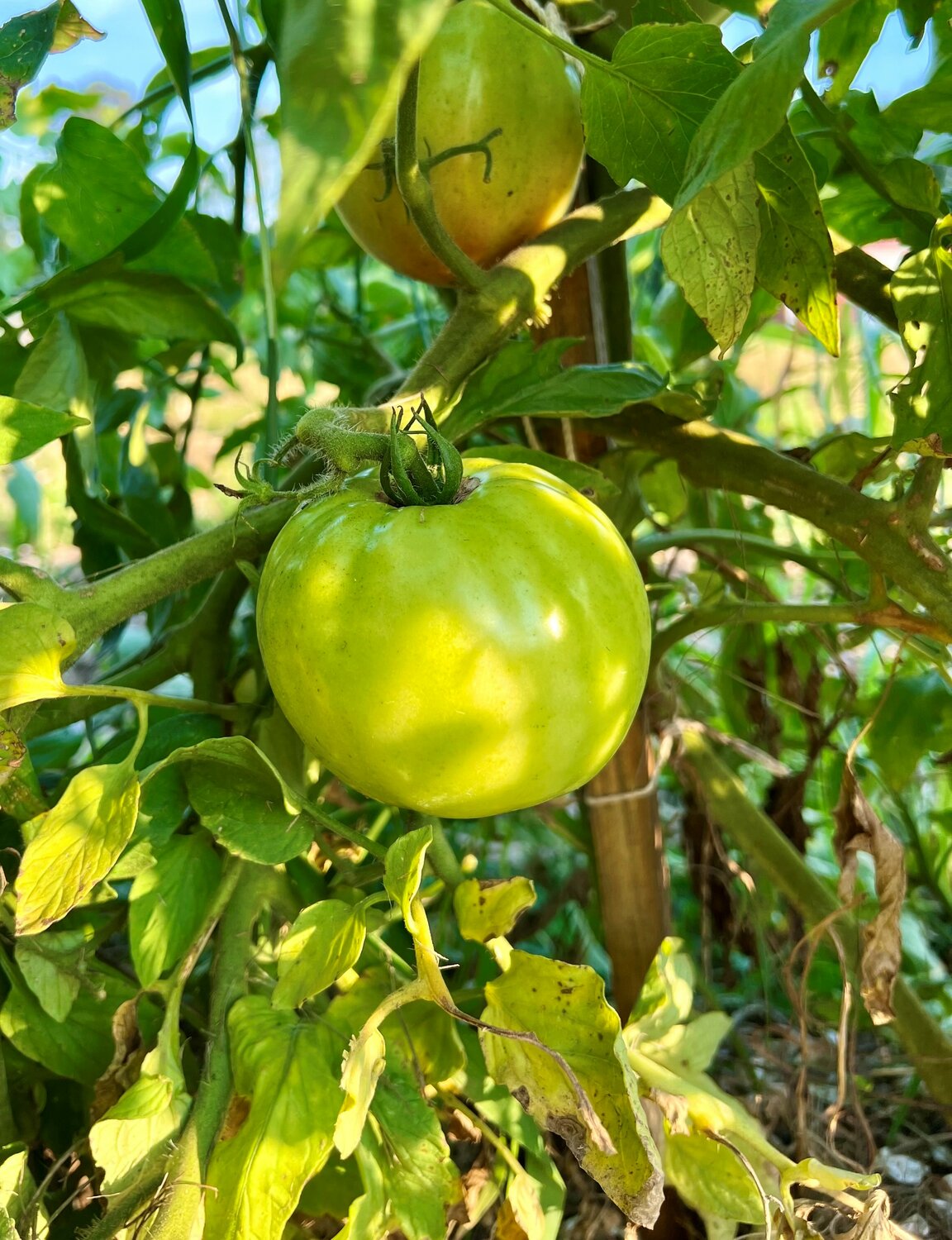
Summer has arrived in South Louisiana, and while April may have been drier than usual, May brought more than enough rainfall to make up the difference. Totals exceeded 11 inches in Baton Rouge and 12 inches at the LSU AgCenter Hammond Research Station—about 7 inches above normal. While this rain provided drought relief, it also created ideal conditions for plant diseases.
Gardeners are already seeing the effects of the presentient wet weather pattern, especially on tomatoes. Extended periods of wet, humid, and warm weather favor the development and spread of fungal and bacterial diseases. These often affect leaves, stems, and fruit and can be difficult to control during rainy periods.
One of the most common diseases right now is Septoria leaf spot, caused by the fungus Septoria lycopersici. It typically appears on older leaves near the base of the plant after fruit set. Symptoms include numerous small, circular, beige spots with dark margins; tiny black specks may be visible in the center. Severely infected leaves turn yellow and drop, weakening the plant and exposing fruit to sunscald. The disease survives on plant debris, volunteer tomatoes, and related weeds, and most varieties are susceptible.
Bacterial spot, caused by species of Xanthomonas, is also common during wet weather. It affects both tomatoes and peppers. Symptoms include small, angular, water-soaked spots on leaves—sometimes with a yellow halo—and raised, scabby spots on fruit. Severe infections can lead to defoliation, reduced yields, and increased sunscald. The bacteria survive on infected plant debris and volunteer plants and spread easily during rain events.
Fruit diseases such as buckeye rot and anthracnose may also develop under prolonged wet conditions. Buckeye rot appears as brown lesions with concentric rings on fruit, often accompanied by white, cottony growth in humid weather. This often appears where fruit comes in contact with the soil. Peppers are also susceptible. Anthracnose causes small, sunken spots that enlarge and develop dark centers with salmon-colored spore masses.
Management of these diseases relies on a combination of good cultural practices and, when needed, properly labeled fungicides. Rotate crops so tomatoes and related plants, such as peppers and eggplants, are grown in the same location only once every three years. Remove and destroy diseased plant material during and after the season to reduce sources of infection. Avoid overhead irrigation and consider drip systems to limit leaf wetness. Proper plant spacing and light pruning can improve air circulation and help foliage dry more quickly.
When disease pressure is high, fungicides labeled for home garden use—such as chlorothalonil, copper, or mancozeb—can help protect plants from further infection. Apply preventively and reapply as directed on the label, especially during periods of frequent rainfall.
Tomatoes are a favorite in backyard gardens, and many gardeners look forward to fresh harvests in early summer. By staying attentive and managing disease early, you can protect your plants and enjoy a productive season despite the challenges of a hot, humid South Louisiana summer.
Quick Tips: Tomato Disease Control


